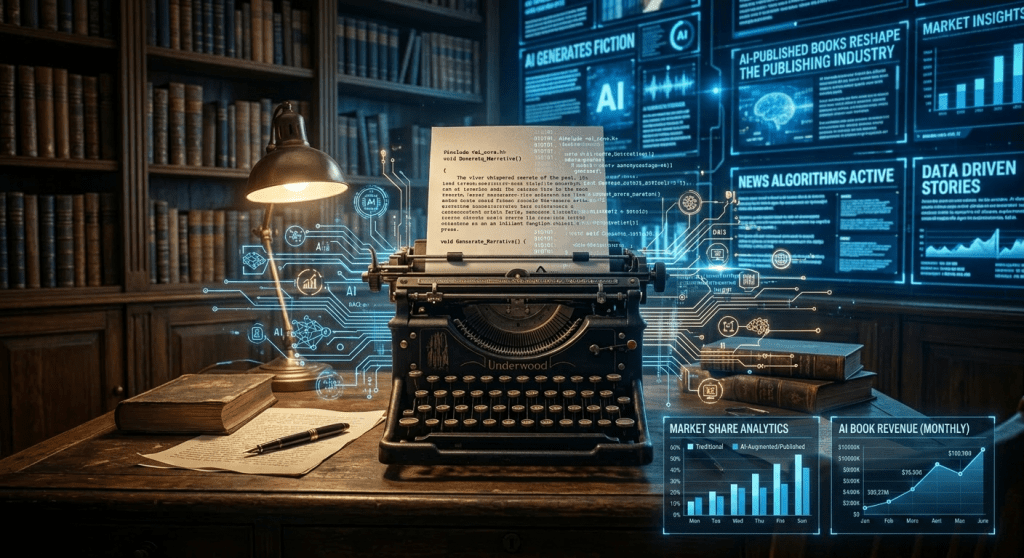
Artificial intelligence is becoming an increasingly visible part of the publishing industry as authors, independent publishers and technology companies use generative AI tools to assist with writing, editing and book production. The rapid growth of AI-assisted publishing has created new opportunities for writers while also raising questions about copyright, transparency and publishing standards.
Self-publishing platforms have made it easier than ever to release books, and generative AI has accelerated that process by helping users draft text, generate illustrations and organize manuscripts. As a result, retailers and publishers have reported a growing number of AI-assisted books entering digital marketplaces. Industry observers note that these developments have prompted discussions about quality control, disclosure requirements and consumer expectations. According to Jane Friedman, AI-generated books have become a significant issue for self-publishing platforms because of the speed at which new titles can be produced.
The legal landscape surrounding AI-generated books continues to evolve. Several lawsuits filed by authors and publishers argue that copyrighted books were used without permission to train large language models. Organizations representing writers have stated that these cases could influence how copyrighted works are licensed for future AI development. In one analysis, The Authors Guild’s overview of AI class-action lawsuits explains that multiple cases involving generative AI companies are currently working through U.S. courts.
Research also suggests that many professional writers remain concerned about AI’s long-term impact on publishing. A report led by researchers at the University of Cambridge found that many published novelists expressed concerns about copyright protection, income and the increasing number of AI-generated books appearing in the marketplace.
Alex Reisner joins the podcast to discuss his investigation into Books3, a massive dataset of pirated books used to train AI systems by companies like Meta, explaining how he made its contents searchable and warning that even authors not listed may still be affected. He explores the legal and ethical uncertainty around AI-generated text, particularly the ambiguous notion of “substantial similarity,” where companies simultaneously claim their models do not replicate authors’ work while marketing them as capable of mimicking specific writing styles. Reisner points out the limited power individual authors have to protect their work, noting that tools like robots.txt or copyright notices offer little defense if courts rule AI training as fair use, and stresses the importance of joint action and greater accountability from publishers. The conversation also examines how digital piracy has evolved—from expanding access for individuals, especially in underprivileged regions, to enabling large corporations to profit—raising complex questions about access, ownership, as well as the broader consequences of turning literature into easily exploitable data.
As AI tools continue to improve, publishers and authors are adapting to new workflows while regulators and courts determine how existing copyright laws apply to emerging technologies. The publishing industry continues to balance technological innovation with the protection of human creativity and intellectual property.
 Inside Literature's Finest
Leave a comment